File Form 1040 with Inkle
Form 1040 is the US Individual Income Tax ReturnIt is the e federal return that every US citizen and resident files each year to report their personal income to the IRS. Whether your income came from a salary, self-employment, investments, pass-through income from a business you own, or a combination of sources, it all flows into Form 1040. Inkle's licensed CPAs handle the return accurately, apply every deduction you are entitled to, and file before your deadline.
What is Form 1040?
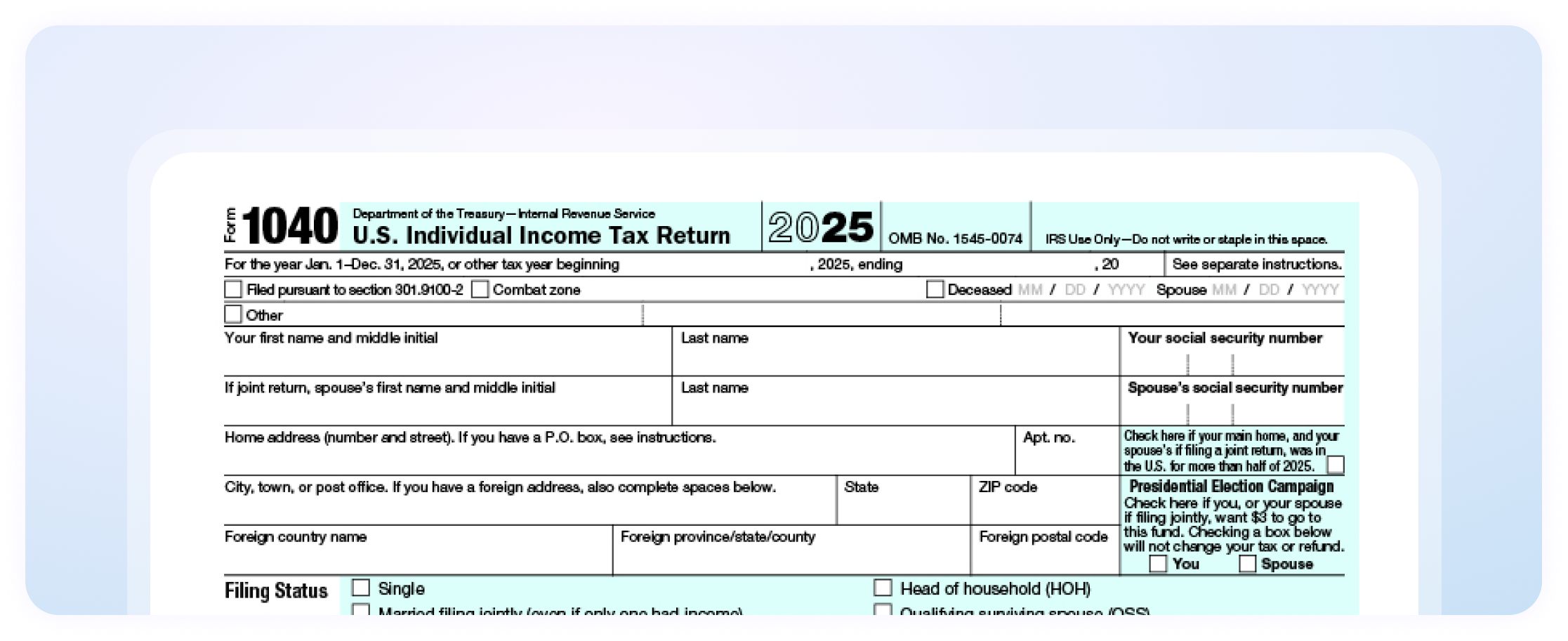
Form 1040 is the US Individual Income Tax Return — the standard federal tax return filed by American individuals each year. It reports your total income from all sources, applies any deductions and credits you qualify for, and calculates how much tax you owe or how much you are owed as a refund.
The form works as a summary, with schedules attached depending on your income sources — self-employment, investments, pass-through income from a business you own, and more. Inkle handles the full return including whichever schedules apply to your situation. You do not need to know which ones are relevant before you start.
.png)
Who can file Form 1040?
Form 1040 is filed by US citizens and resident aliens who meet the IRS filing requirements for the year. The obligation is tied to income thresholds and filing situations rather than citizenship alone. This filing is generally required when income exceeds the threshold for your filing status, when net self-employment earnings exceed $400, or when another filing situation applies.

US citizens living in the US
Standard individual filers with income from employment, self-employment, investments, or a combination of these. Form 1040 consolidates all of it into a single return.
US citizens living abroad
The US taxes its citizens on worldwide income, so the filing rules apply whether you live in the United States or abroad. The Foreign Earned Income Exclusion and Foreign Tax Credit can significantly reduce what you owe, but both require filing to claim.
Founders and business owners receiving K-1 income
If you own a stake in a partnership or S Corporation, your Schedule K-1 income is reported on your personal Form 1040. This is one of the more technically involved parts of an individual return.
Self-employed individuals and sole proprietors
Income from self-employment or freelance work is reported on Schedule C, which attaches to your Form 1040. Self-employment tax is calculated and paid through the same return.
Inkle makes filing Form 1040 simple
A licensed CPA handles your Form 1040 from intake through submission, identifying which schedules apply, preparing the complete return, and filing it.
We review your full financial picture before filing, including retirement contributions, business expenses, foreign income exclusions, and pass-through deductions where they apply.
If you receive a Schedule K-1 from a US partnership or S Corporation, Inkle's CPAs handle the reconciliation and report it accurately on your personal return.
You see the completed return before it goes to the IRS. Once you approve, Inkle submits it and sends you confirmation with a copy for your records.
Deadline
The deadline to file Form 1040 is April 15 for most individuals on a calendar tax year. If you need more time, you can file for an automatic six-month extension using Form 4868, which moves the deadline to October 15. The extension gives you more time to file the return, but it does not extend the time to pay any tax owed. If you expect to owe tax, an estimated payment by April 15 avoids interest and penalties on the unpaid amount.
US citizens living abroad get an automatic two-month extension to June 15 without needing to file Form 4868, though interest still accrues on any unpaid tax from April 15.
Pro Tip
The failure-to-file penalty is 5% of unpaid tax per month, up to 25% of the total. The failure-to-pay penalty is 0.5% per month. Filing on time, even if you cannot pay the full amount owed, avoids the larger of the two penalties.
.png)
FAQs
Form 1040 is the federal income tax return for US citizens and resident individuals. It reports all income earned during the year from every source, applies deductions and credits, and calculates the tax owed or the refund due. It is the central document in your annual personal tax filing.
Any US citizen or resident alien whose income meets or exceeds the IRS filing threshold for the year is required to file. US citizens must file regardless of where in the world they live. The filing threshold varies depending on filing status, age, and income type, and changes slightly each year. If you are not sure whether you need to file, the answer for most working adults with any meaningful income is yes.
Form 1040 is for US citizens and resident aliens. Form 1040-NR is for non-resident aliens, meaning individuals who are not US citizens or green card holders and who do not meet the substantial presence test. If you are a US citizen, you file Form 1040 every year regardless of where you live. If you are a foreign national with US-sourced income but no US citizenship or residency, Form 1040-NR is the correct return.
The most common ones are Schedule A for itemized deductions, Schedule B for interest and dividend income, Schedule C for self-employment or sole proprietorship income, Schedule D for capital gains and losses, and Schedule E for pass-through income from partnerships or S Corporations. Whether any of these apply to you depends on your income sources and your situation. Inkle's CPA identifies the relevant schedules as part of preparing the return.
K-1 income from a partnership or S Corporation is generally reported on Schedule E of your Form 1040. The specific lines depend on the type of income or loss reported on the K-1. This is one of the more technically specific parts of an individual return, and Inkle's CPAs handle the reconciliation as part of your filing.
Yes. The US taxes its citizens on worldwide income, which means US citizens file a federal return every year regardless of where they live or where they earn their income. If you also pay tax in the country where you live, you may be able to claim the Foreign Tax Credit to offset your US tax liability and avoid being taxed twice on the same income. US citizens abroad also get an automatic two-month extension to June 15, though this does not extend the deadline for paying any tax owed.
April 15 for most individuals. A six-month extension to October 15 is available by filing Form 4868 before April 15. US citizens living abroad receive an automatic extension to June 15 without needing to file separately, but interest accrues on any unpaid tax from April 15.
The failure-to-file penalty is 5% of any unpaid tax per month, up to a maximum of 25%. A separate failure-to-pay penalty of 0.5% per month applies to any tax not paid by the original deadline. Filing on time, even if you cannot pay the full balance, avoids the larger of the two penalties.

