Simplifying US incorporations
for Indian Founders

Inkle helps Indian founders set up and maintain US companies the right way.
Platforms we work with

Choose how you incorporate

We partner with the best platforms. You pick what fits.

We handle the rest end-to-end.

01

Comprehensive US paperwork on one streamlined platform
FEMA-compliant docs built in — Stock Purchase Agreements, Board Consents and more
Includes Clerky's Company Lifetime Package
Go to Inkle Incorporate

02

Self-serve incorporation
Incorporate on Atlas, then use Inkle to finish formation paperwork
Includes Stripe credits redeemable across Payments, Billing, Tax, and more
Go to Stripe Atlas
Incorporation structures

Choose your incorporation structure

Three paths, each built for a different founder profile and growth plan.

Option 1
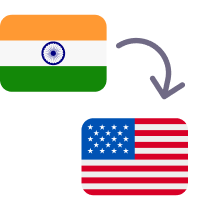
India parent with US subsidiary

India topco

Compliance
India regulations mainly, some US compliances needed.
Only 2 entities (India parent, US subsidiary).
Features
Works for founder teams who want to stay in India and raise from Indian investors.
Best if bootstrapped, services company, or building mainly for India but need a US entity.

Option 2

US-as-a-parent with India subsidiary

Classic "triangle" structure

Compliance
More complex regulations in both countries and intragroup matters.
At least 3–4 entities, more costly to start and operate.
Features
Best for founders who want to eventually move abroad, or mixed residency teams.
Ideal for raising from global investors and focusing on US/global markets.
What makes it unique

What Indian founders need to know

US incorporation for Indian residents involves additional regulatory layers.

Here's what sets it apart.

FEMA regulations

Cross-border investments by Indian residents are governed by the Foreign Exchange Management Act, 1999, along with the regulations issued under it. Founders need to stay within annual investment limits, report their overseas holdings to the RBI, and file the right forms at each stage.

The ODI process

Overseas Direct Investment requires routing your investment through an Authorised Dealer bank and filing the necessary forms, covering initial investment, follow-on investments, and annual reporting.

Transfer Pricing Mechanisms

Transactions between your US parent and Indian subsidiary such as service fees, cost allocations, shared resources must be priced at arm's length. Getting this wrong risks tax scrutiny in both countries.

Learn before you incorporate

Foundational guides for every founder setting up a US entity.

Read guides

FAQs

Can Indian residents own a US company?
Yes. Indian residents can incorporate and own a Delaware C-Corp. This is permitted under FEMA's ODI framework, subject to Form ODI reporting with your AD bank. No prior RBI approval is needed for most structures.

Where it gets interesting is when Indian resident founders need to have a subsidiary of this US entity. FEMA restricts Indian founders from having this setup, and hence the need for the LLP.
Do I need FEMA approval to incorporate?
No prior approval is required for most incorporations. However, Form ODI must be filed with your Authorised Dealer bank, and the investment must comply with the LRS limit of USD 250,000/year.
Do I need an ITIN as a non-US founder?
An ITIN is required when you have personal US tax obligations — for example, when receiving a salary or dividends from your US company. Many early-stage founders may not need one immediately.
Can I open a US bank account from India?
Yes. Mercury, Relay, and Brex allow non-US residents to open business accounts remotely after incorporation. Traditional banks typically require in-person visits with US identification.
What is the 83(b) election and why does it matter?
An IRS election filed within 30 days of receiving vesting shares — it locks in your tax basis at grant-date value (near zero at founding) instead of at each vesting event. Missing this deadline is irrevocable and can result in a large tax bill later.

Ready to simplify your incorporation journey? Try Inkle Incorporate now!