1099-K vs. 1099-NEC: What You Actually Need to Know



If you are self-employed, a freelancer, or run a side hustle, you have probably come across both the 1099-K and the 1099-NEC. Even though they sound similar and both report income to the IRS, they serve completely different purposes. Understanding the difference is crucial for accurate tax filing and avoiding unnecessary audits.
What Is Form 1099-NEC?
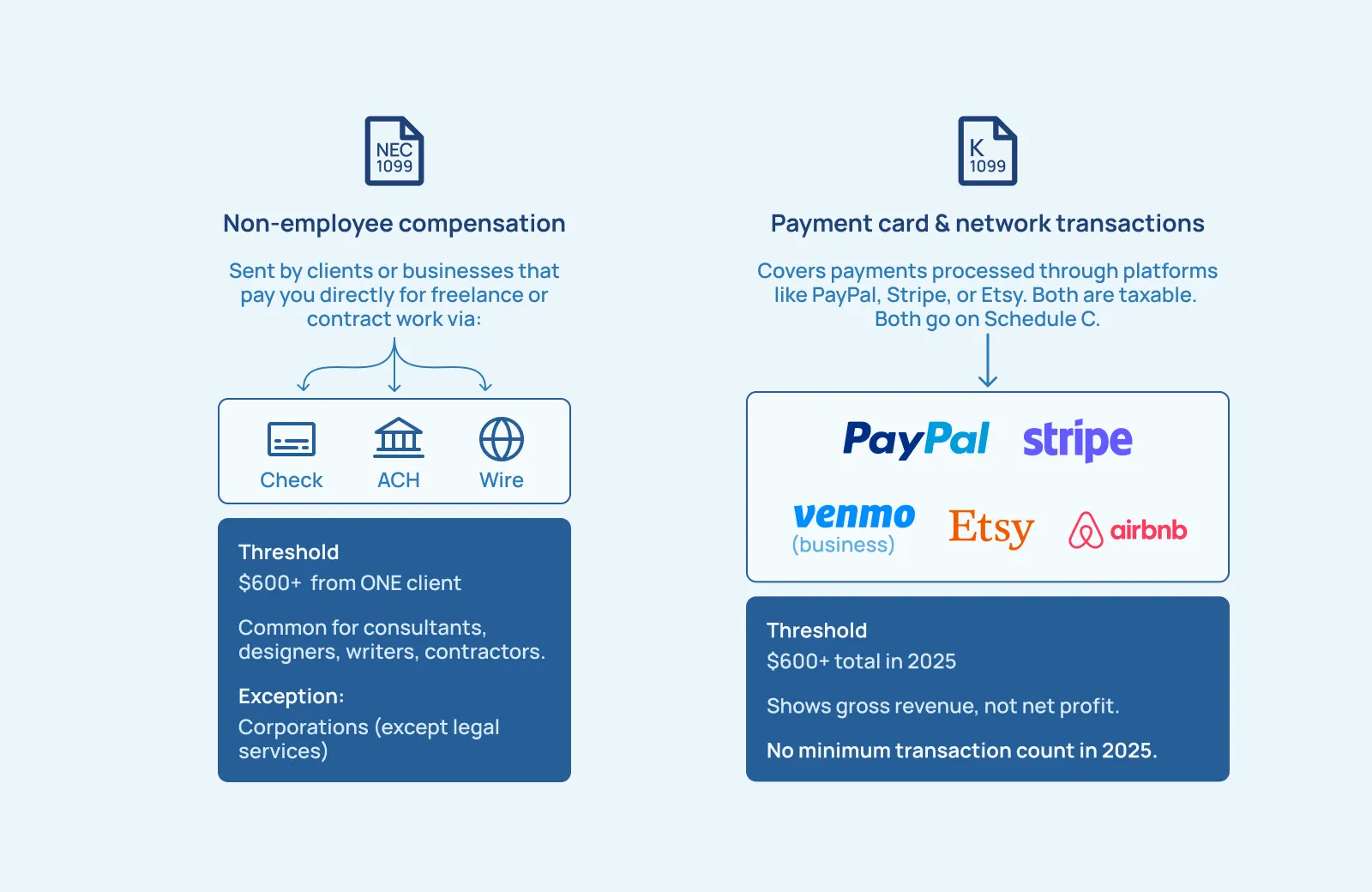
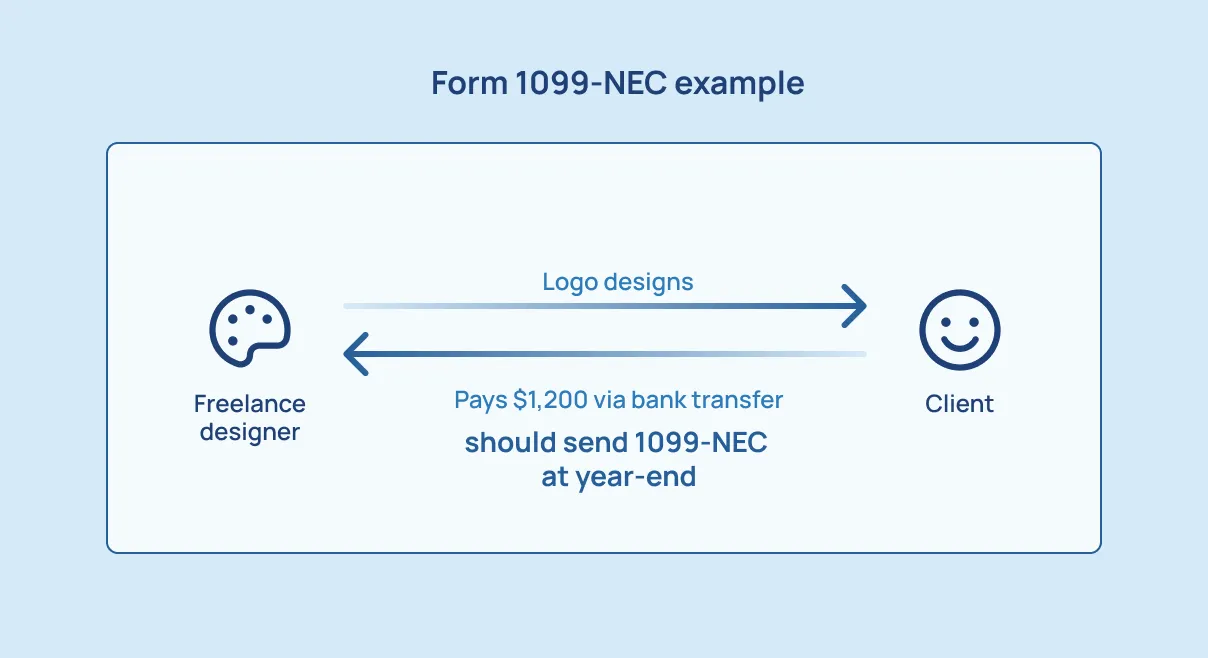
1099-NEC stands for Nonemployee Compensation. It is used to report payments of $600 or more made to independent contractors, freelancers, or self-employed individuals for services rendered.
You receive it when a client pays you directly via check, bank transfer, or cash for freelance work. The client sends it to both you and the IRS. It is most common for consultants, graphic designers, writers, and other service providers.
One exception worth noting: you typically will not get a 1099-NEC if the payer is a corporation, except for legal services.
What Is Form 1099-K?
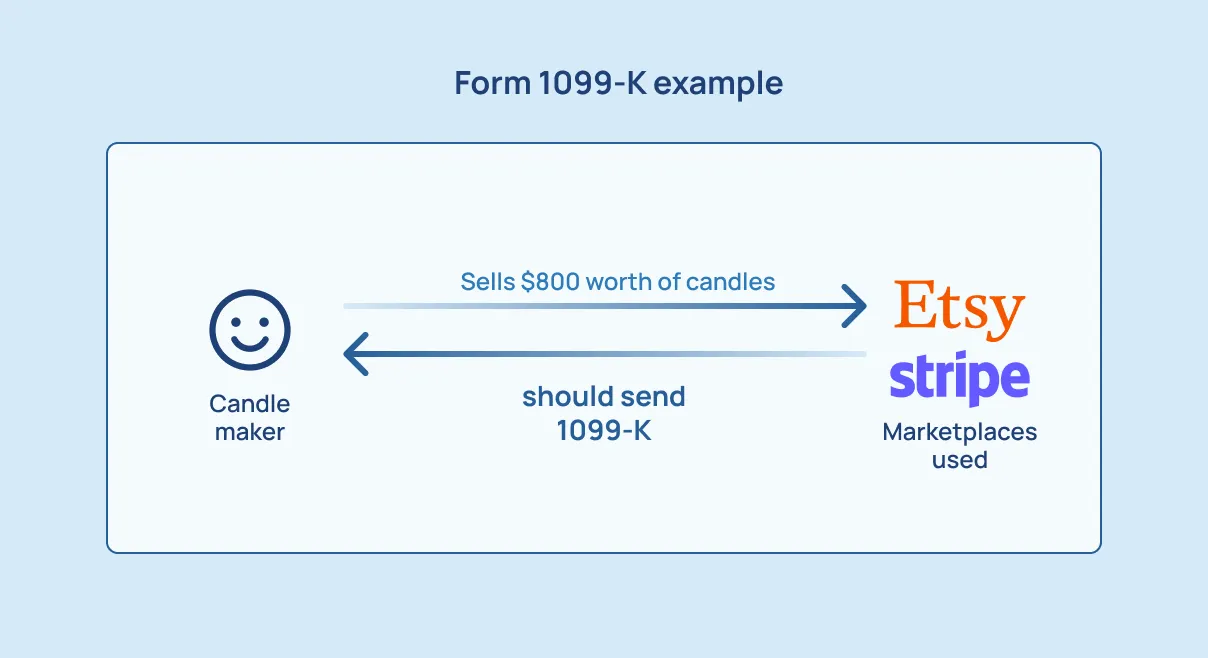
1099-K reports Payment Card and Third-Party Network Transactions. It is issued by payment processors or online marketplaces that handle your transactions, not by your clients directly.
You receive it from platforms like PayPal, Venmo (business), Stripe, Square, Etsy, eBay, or Airbnb. Importantly, it shows your gross revenue processed through these platforms, not your net profit. For 2025, the threshold is $600 in total gross payments regardless of how many individual transactions you had.
Key Differences at a Glance
Can You Receive Both Forms?
Yes, and many freelancers and startup founders do. You might get a 1099-NEC from a retainer client who pays by ACH, and also a 1099-K from Stripe for one-off project payments collected through a platform. Both report income the IRS already sees, and you need to reconcile them on Schedule C.
One important rule: even if you earn under $600 and receive no form at all, the income is still taxable and must be reported. The threshold only determines whether a form gets issued, not whether you owe tax.
How to Report Each Form on Your Taxes
Reporting your 1099-NEC
- Report on Schedule C (Profit or Loss from Business)
- Income goes on Line 1 of Schedule C
- Subject to self-employment tax, which covers Social Security and Medicare
Reporting your 1099-K
- Also reported on Schedule C
- Match the gross amount from the form on Line 1
- Subtract business expenses to arrive at net profit
- If you received a 1099-K for personal transactions like splitting rent, keep records showing those are not business income
The 2025 Threshold Change
The IRS lowered the 1099-K reporting threshold significantly. The old rule required $20,000 in payments and 200 or more transactions before a form was issued. That has changed, and far more side hustlers and startup founders will now receive this form than in previous years.
Common Mistakes to Avoid
A few patterns consistently trip people up when dealing with these forms.
Ignoring a 1099-K. The IRS receives a copy too. If your reported income does not match what they have on file, it flags a mismatch and can trigger an audit.
Reporting gross as profit. Your 1099-K shows gross revenue. You are allowed to deduct your business expenses. Report net profit on Schedule C, not the gross amount from the form.
Mixing personal and business payments. Personal Venmo transfers for splitting dinner or paying rent are not taxable income. Keep them in a separate account or document them clearly so you are not over-reporting.
Assuming no form means no tax. If you earned under $600 from a client or platform and received no 1099, you still owe tax on that income. All income counts.
Understanding these two forms helps you stay compliant, avoid IRS notices, and file with confidence. Keep detailed records of all income and expenses regardless of which form you receive. When in doubt, consult a tax professional, especially if you receive both forms or have mixed personal and business transactions.
If you are a startup founder paying US contractors, you are required to file 1099-NECs for every contractor paid $600 or more. Inkle handles the entire workflow, from collecting W-9s to filing with the IRS, so you stay compliant without the spreadsheet headache. Purpose-built for Delaware C-Corps and early-stage US startups.
.webp)



.svg)
