What Are the Delaware Incorporation Requirements in 2026 for Founders



Delaware continues to be the default choice for incorporation in 2026, especially for startups and global founders building for the US market. Its legal system, investor familiarity, and flexible corporate structures make it the preferred option for companies planning to raise capital or scale internationally.
Many founders assume incorporation is just about filing a form. But it involves multiple steps such as legal setup, tax registration, and ongoing compliance.
This guide breaks down the exact Delaware incorporation requirements in 2026. It is designed as a step-by-step resource for founders building US entities remotely, managing cross-border operations, or preparing for fundraising so you can set up your company correctly from day one.
Questions this article answers
- What are the exact requirements to incorporate in Delaware
- What documents do you need before filing
- What information goes into the Certificate of Incorporation
- What steps are required after incorporation
- What ongoing compliance obligations must founders meet
- Do non-US founders face additional requirements
- How can you stay compliant without missing deadlines
What Do You Need Before Filing a Delaware Company
Before you file your Delaware company, you need to prepare a few foundational elements. These are not complex, but missing any of them can delay your incorporation or lead to rejections. This stage is about ensuring your company meets basic legal requirements before submitting any documents to the state.
Most founders rush into filing without validating these inputs. Taking a few extra steps here helps avoid rework and ensures your incorporation process moves smoothly.
Choose a Compliant and Available Business Name in Delaware
Your company name must be unique and distinguishable from existing entities registered in Delaware. You can check availability through the Delaware Division of Corporations database before filing.
The name must also include a legal suffix such as “Inc.”, “Corp.”, or “LLC” depending on your entity type. Using restricted words like “Bank” or “Insurance” may require additional approvals.
Every Delaware Company Needs a Registered Agent
A registered agent is mandatory for all Delaware entities. This agent must have a physical address in Delaware and is responsible for receiving legal notices and official communications on behalf of your company.
For founders operating remotely or from outside the US, the registered agent enables incorporation without needing a physical presence in the state.
What you need before filing:
- A unique and compliant company name
- A registered agent with a Delaware address
- Basic founder and company details for the filing
Information You Must Include in the Delaware Certificate of Incorporation
The Certificate of Incorporation is the core legal document that officially establishes your entity in Delaware. It defines key aspects of your business, including its structure, ownership framework, and basic governance setup. Getting this right at the beginning is important because changes later can involve additional filings and costs.
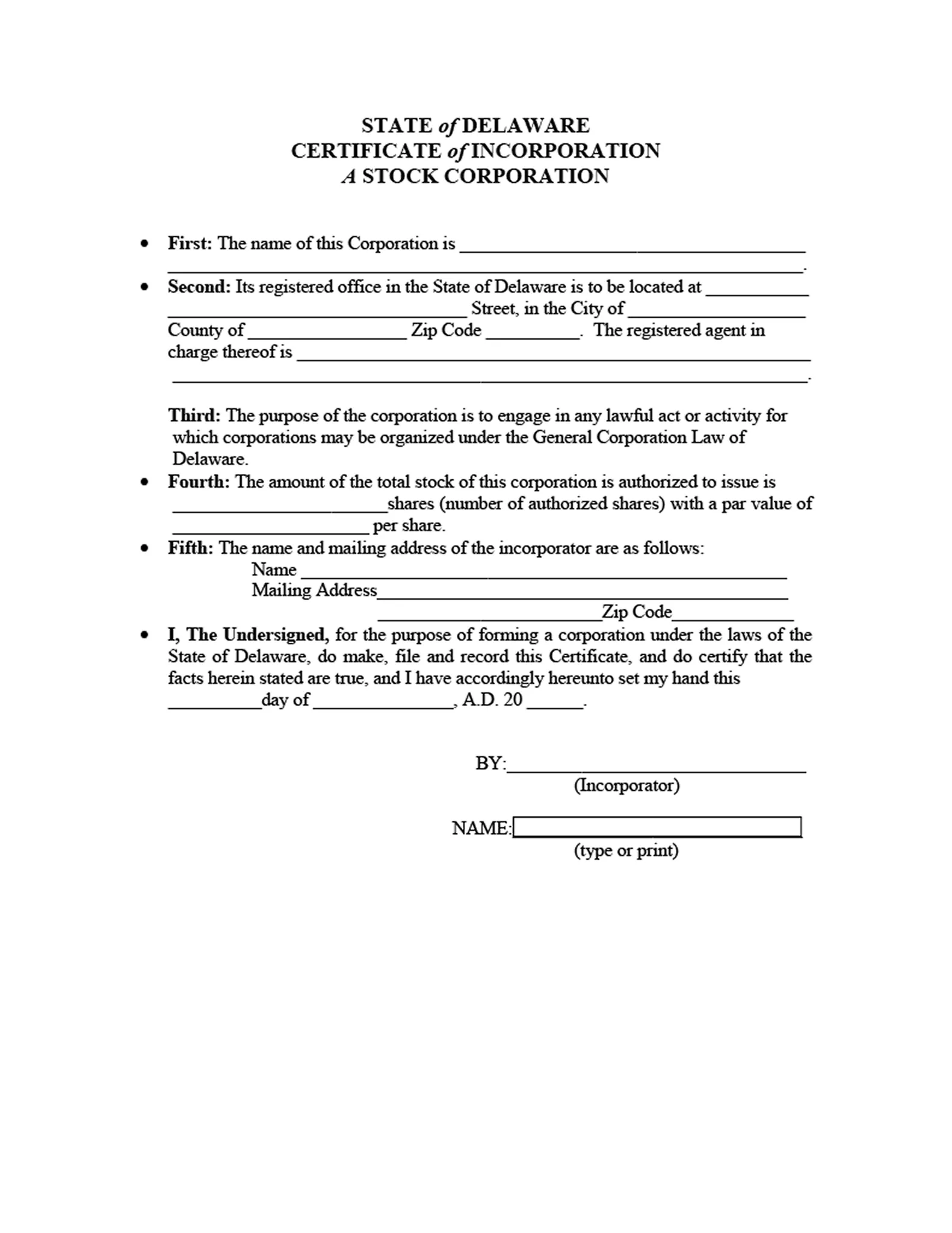
While the document is relatively short, each element carries long-term implications. Decisions made here can affect fundraising, equity distribution, and even your annual franchise tax.
Mandatory Details in a Delaware Incorporation Filing
At a minimum, the Certificate of Incorporation must include essential company information required by the state. This ensures your company is legally recognized and can operate within the Delaware framework.
These details are standardized, but accuracy matters. Any mismatch or omission can delay approval or create issues later.
How Do Share Structure and Par Value Decisions Impact Your Setup
One of the most important parts of the filing is defining your authorized shares and their par value. This directly affects how ownership is structured and can also influence your franchise tax calculation.
Startups often authorize a large number of shares to allow flexibility for future funding rounds and employee stock options. A minimum legal price at which shares can be issued, often set very low (e.g., $0.0001) to minimize state franchise taxes. Setting this up incorrectly can lead to higher ongoing costs.
Key components of the Certificate of Incorporation:
- Company name and registered agent details
- Incorporator information
- Authorized share structure and par value
- Business purpose clause (often broadly defined)
Process to File Your Delaware Incorporation in 2026
Filing a Delaware company in 2026 is largely a digital-first process. Most incorporations are submitted online through the Delaware Division of Corporations or via service providers. This has made the process faster and more accessible, especially for founders operating remotely.
.webp)
Once your Certificate of Incorporation is prepared, you submit it along with the required filing fee. Processing times vary based on the option you choose, and many founders opt for faster turnaround when working against timelines like fundraising or bank account setup.
What to expect during filing:
- Standard processing typically takes a few business days
- Expedited options are available for 24-hour, same-day, or even 1-hour processing for additional fees (e.g., $100 - $1,000 depending on urgency)
- Most filings are completed through online or service-based submissions
What Steps Are Required Immediately After Incorporation
Once your Delaware company is approved, there are a few immediate steps you need to complete before you can operate fully. Incorporation gives your company legal existence, but it does not make it operational. You still need to set up governance, register for taxes, and formalize ownership.
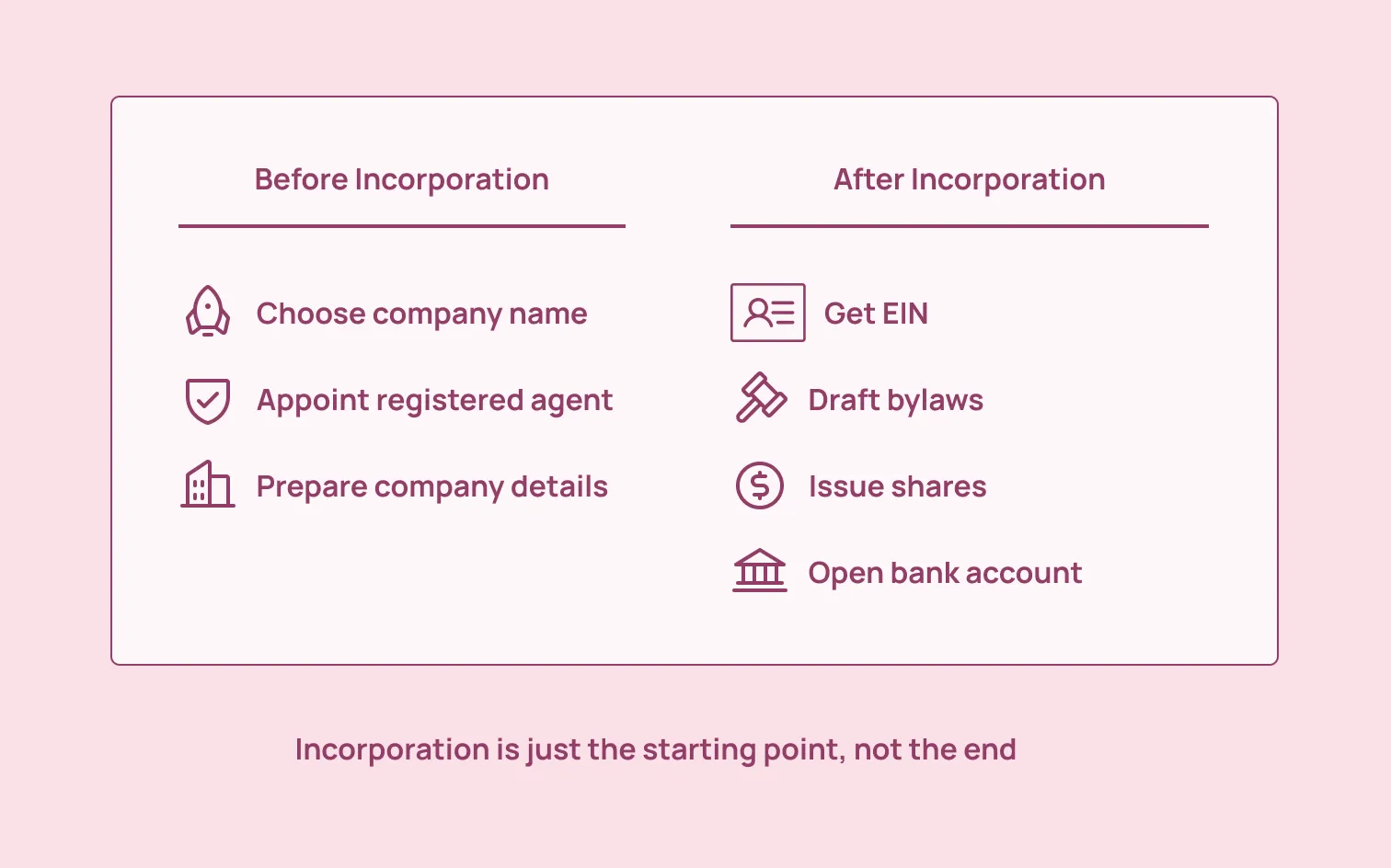
Many founders delay these steps, which can create problems when opening a bank account or starting a funding process. Completing them early keeps your company ready for operations and investor scrutiny.
Get Corporate Bylaws for Your Company
Corporate bylaws define how your company is governed. They outline how decisions are made, how directors are appointed, and how shareholder rights are structured.
Even though bylaws are not filed with the state, they are required for internal governance and are often reviewed during due diligence.
Get an EIN for Your Delaware Company
An Employer Identification Number (EIN) is issued by the Internal Revenue Service. It acts as your company’s tax ID and is required for opening a US bank account, hiring employees, and filing taxes.
Founders can apply for an EIN online, but non-US founders may need to follow a different process if they do not have a Social Security Number.
Issue Shares to Founders After Incorporation
After incorporation, you need to formally issue shares to founders based on your agreed ownership structure. This involves board approval and proper documentation.
Clear documentation at this stage avoids disputes later and ensures your cap table is clean when you approach investors.
Immediate post-incorporation steps:
- Draft and adopt corporate bylaws
- Apply for an EIN from the IRS
- Issue founder shares and document ownership
- Open a business bank account for operations
Ongoing Compliance Requirements Must You Meet in Delaware
After incorporation, maintaining compliance is what keeps your Delaware company active and in good standing. These are recurring obligations that apply every year, regardless of your revenue or stage. Missing these recurring obligations can lead to significant penalties. For instance, a $200 penalty for corporations failing to file their annual report on time, plus interest, or even administrative dissolution for prolonged non-compliance.
Many founders treat compliance as a one-time task, but it is an ongoing process. Staying organized with deadlines and filings is just as important as setting up the company correctly.
Franchise Tax and Annual Filing Requirements Apply to Your Company
Delaware requires corporations to pay franchise tax annually and file an annual report. The amount of tax depends on your company’s structure, especially your share setup and calculation method.
LLCs, on the other hand, pay a flat annual tax and do not need to file an annual report. However, they still need to meet other compliance obligations such as maintaining a registered agent.
When Do You Need to File Annual Reports and What Do They Include
Annual reports are required for Delaware corporations and must include basic company information such as director details and company status. These filings ensure the state has updated records of your business.
Failing to file on time can result in penalties and may impact your company’s legal standing, which can create issues during fundraising or banking.
Ongoing compliance requirements:
- Pay Delaware franchise tax every year
- File annual reports if you operate as a corporation
- Maintain an active registered agent in Delaware
- Keep company records and ownership details updated
When Do You Need Foreign Qualification
Foreign qualification applies when your Delaware company operates outside the state. Incorporating in Delaware does not mean all your compliance obligations are limited there. If your business has a presence in another state, you may need to register there as a foreign entity.
This requirement is triggered by actual business activity, not just incorporation. Founders often miss this step, which can lead to penalties or restrictions on operating legally in that state.
When foreign qualification is required:
- When you have employees working in another state
- When you operate an office or physical location outside Delaware
- When you generate significant business activity or revenue in another state
How Do You Choose Between C Corp and S Corp Status
Choosing between C Corp and S Corp is not about incorporation, but about tax election after your company is formed. By default, a Delaware corporation is taxed as a C Corp. You can later elect S Corp status with the Internal Revenue Service if you meet eligibility criteria.
For most startups planning to raise venture capital, the default C Corp structure is preferred. S Corps have restrictions on ownership and share classes, which can limit fundraising flexibility.
C Corp vs S Corp Overview:-
Additional Requirements Apply for Non US Founders in 2026
Delaware has seen a steady rise in non-US founders incorporating companies, especially from countries like India. While the core incorporation process remains the same, there are a few additional steps that global founders must plan for. These are mostly related to tax identification, banking, and cross-border compliance.
The complexity increases after incorporation. Managing US requirements while also staying compliant in your home country can create gaps if not handled properly. This is where many founders face delays, especially when opening bank accounts or preparing for funding.
Additional requirements for non-US founders:
- Applying for an EIN without a Social Security Number, which may require manual processing
- Meeting US banking requirements, including documentation and identity verification
- Managing cross-border tax and reporting obligations between jurisdictions
How Inkle Helps You Handle Delaware Incorporation Requirements
Managing Delaware incorporation is not just about completing steps. It is about keeping everything aligned across legal, tax, and financial workflows. For global founders, especially those operating between the US and India, this quickly becomes difficult to manage manually.
You need to track filings, maintain records, handle tax registrations, and stay ready for investor due diligence. Missing even one requirement can delay operations or create issues later.
Inkle helps you manage this entire process in a structured way so that nothing falls through the cracks.
How Inkle supports your incorporation and compliance:
- Handles US incorporation for founders operating from outside the US
- Tracks compliance deadlines and required filings in one place
- Automates bookkeeping and prepares investor-ready financials
- Supports cross-border operations and reporting requirements
Book a demo with Inkle to set up your Delaware company and stay compliant without managing multiple tools or advisors.
Frequently Asked Questions
What are the main requirements to incorporate in Delaware?
You need a unique company name, a registered agent with a Delaware address, and a Certificate of Incorporation with basic company details. These form the foundation of your legal setup.
Do I need to live in Delaware to incorporate there?
No. You can incorporate from anywhere in the world. The only requirement is to appoint a registered agent with a physical address in Delaware.
What is included in the Certificate of Incorporation?
It includes your company name, registered agent details, incorporator information, share structure, and a business purpose clause. These define your company’s legal and ownership framework.
How long does Delaware incorporation take in 2026?
Standard processing usually takes a few business days. Expedited options can reduce this to 24 hours or even faster, depending on the level of urgency and fees paid.
What happens after Delaware incorporation is complete?
You need to draft bylaws, obtain an EIN, issue founder shares, and open a business bank account. These steps make your company operational.
What are the annual compliance requirements in Delaware?
You must pay franchise tax, file annual reports if you are a corporation, maintain a registered agent, and keep company records updated.
Can non US founders incorporate in Delaware?
Yes. Delaware allows non-US founders to incorporate easily. However, they must handle additional steps like EIN application, banking, and cross-border compliance.


.webp)
