Delaware Incorporation Cost in 2026 for Startups and Founders



Delaware continues to be the default choice for incorporation in 2026, especially for startups and global founders targeting the US market. Its legal system, investor familiarity, and flexible corporate structures make it the go-to option for companies planning to raise capital or scale internationally. But while the benefits are widely discussed, the actual cost of incorporating and maintaining a Delaware entity is often less clear.
Many founders focus only on the initial setup fee and overlook the ongoing costs that come with maintaining a Delaware company. These include franchise taxes, registered agent fees, compliance filings, and additional requirements if you operate outside Delaware.
This article breaks down the full Delaware incorporation cost in 2026, including both one-time and recurring expenses. It is designed as a practical budgeting guide for founders who are raising capital, planning expansion, or managing cross-border operations so you can make informed decisions without unexpected financial surprises.
Questions this article answers:-
- What is the total Delaware incorporation cost in 2026?
- How much does it cost to form a C-Corp vs LLC?
- What are the ongoing annual compliance costs?
- How does Delaware franchise tax work?
- What hidden costs should founders plan for?
- When do additional costs like foreign qualification apply?
- How can founders reduce unnecessary expenses?
Factors Affecting Delaware Incorporation Cost in 2026
The total Delaware incorporation cost depends on two factors: how you set up your company and how you manage it over time.
State fees have remained relatively stable. However, service costs for items like registered agents, compliance tools, and legal support have seen an estimated 10-15% increase year-over-year
For most founders, the total cost is a combination of one-time setup costs and recurring annual expenses. Setup costs include state filing fees and optional services like expedited processing. Ongoing costs include franchise tax, registered agent fees, and compliance-related expenses that continue every year.
.webp)
The key mistake founders make is budgeting only for incorporation and ignoring annual obligations. A Delaware company is not expensive to set up, but it does require consistent spending to stay compliant and in good standing.
Cost Overview (2026 Estimate):-
How Much Does It Cost to Form a Delaware Corporation
Forming a Delaware corporation involves a base state filing fee along with additional costs that depend on how you structure your company. In 2026, most startups choose a standard C-Corp structure with a high number of authorized shares, which can slightly increase the filing cost compared to a minimal setup.
Beyond the base filing, founders often choose optional services that impact both speed and cost. Expedited processing is common when you are working against a fundraising timeline or need documents quickly for banking or compliance.
What Is the Certificate of Incorporation Filing Cost in Delaware?
The Certificate of Incorporation is the primary document required to form your company. Delaware charges a base filing fee, but this amount can increase depending on your authorized share structure and any additional clauses included in the document.
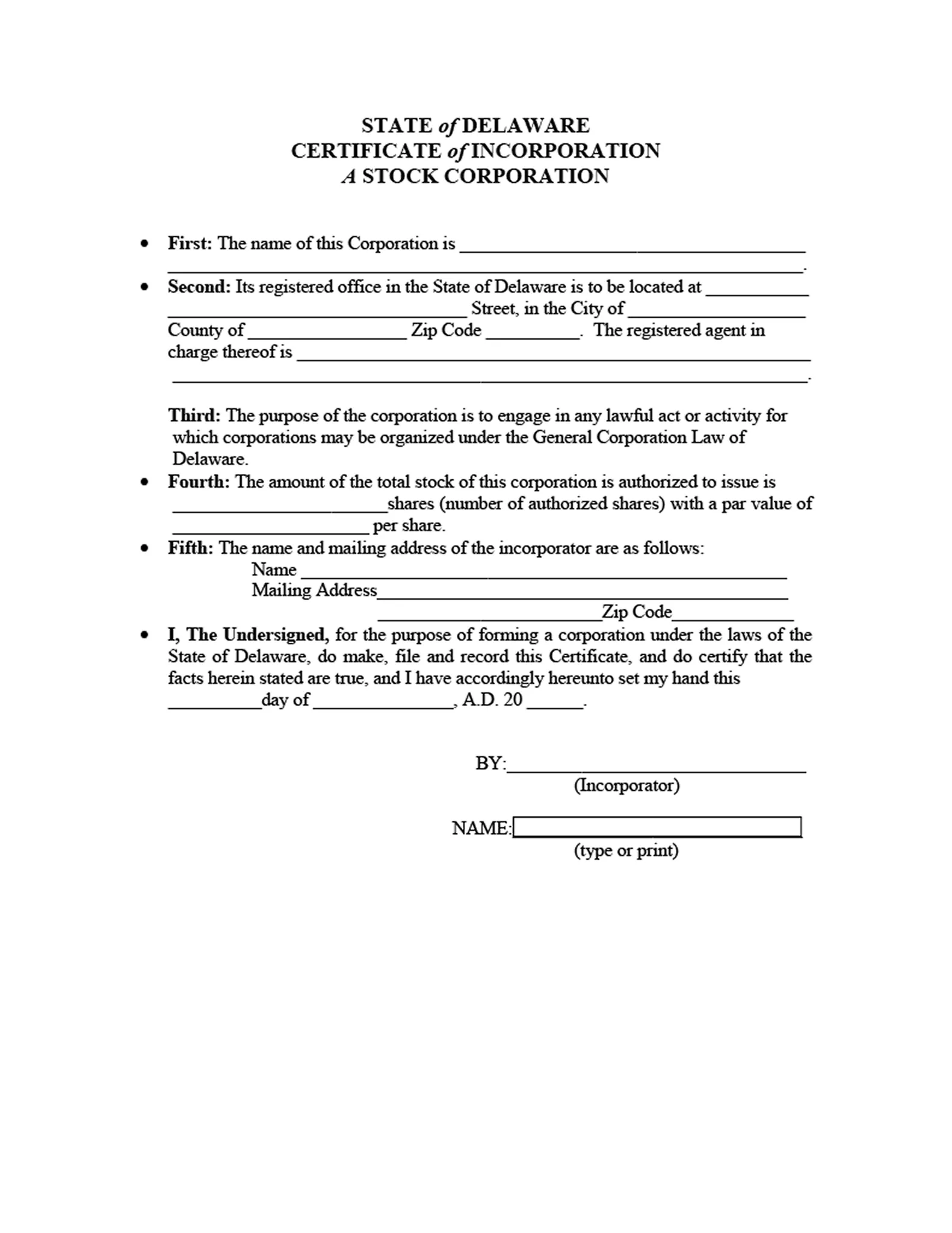
Startups typically authorize a large number of shares early on, which may lead to higher initial filing fees. However, this is often done to maintain flexibility for future fundraising and equity allocation.
In practice, this is how the cost range looks like for different entities:-
- Basic C-Corp setup: $200-$500 (state fees + registered agent)
- C-Corp with 10M authorized shares: $500-$1,000+ (higher state fees due to shares
- Delaware LLC setup: $90-$300 (simpler, fixed fees)
Should You Pay for Expedited Incorporation Processing?
Delaware offers multiple expedited processing options, including 24-hour, same-day, and even faster premium processing. These options come at an additional cost.
If you are incorporating ahead of a funding round or need documents urgently, expedited processing can be useful. Otherwise, standard processing timelines are usually sufficient and more cost-effective.
Typical setup cost components:
- Base state filing fee for the Certificate of Incorporation
- Additional fees based on authorized share structure
- Optional expedited processing fees depending on urgency
How Much Does It Cost to Form a Delaware LLC
Forming a Delaware LLC is simpler and usually cheaper than setting up a corporation. There is no concept of share structure, which removes one of the main variables that increases incorporation costs for C Corps. This makes LLCs a straightforward option for founders who want a quick and low-cost setup.
The process involves filing a Certificate of Formation and appointing a registered agent. Because the structure is simpler, there are fewer decisions to make during setup, and the overall cost remains predictable.
Typical setup cost components:
- State filing fee for the Certificate of Formation
- No additional costs related to share structure or equity setup
- Faster and more cost-efficient setup compared to corporations
What Are the Annual Costs to Maintain a Delaware Company
Once your company is incorporated, the real cost begins with annual compliance. Delaware requires companies to meet ongoing obligations to remain in good standing. These costs repeat every year and vary based on whether you operate as a corporation or an LLC.
For corporations, annual costs are more variable and depend on factors like share structure and reporting requirements. LLCs, on the other hand, have a simpler and more predictable cost structure. The common mistake founders make is ignoring these recurring obligations until penalties or late fees start adding up. For example, Delaware imposes a $125 penalty for late franchise tax filings, plus interest, which can accrue quickly.
Annual cost breakdown:-
This is how the cost range could look like:-
- Registered Agent Fee: $100-$300 annually
- Delaware Franchise Tax (C-Corp): $50-$200,000+ (variable, depends on share structure and calculation method)
- Delaware Annual Tax (LLC): $300 (fixed)
- Compliance Software/Tools: $50-$500 annually
How Delaware Franchise Tax Impacts Your Delaware Incorporation Cost
Delaware franchise tax is one of the most misunderstood parts of incorporation cost. It is not based on your company’s revenue or profit. Instead, it depends on how your company is structured, especially the number of authorized shares and how you calculate the tax.
.webp)
This is why two startups at the same stage can pay very different amounts. Founders who do not plan this early often end up with unexpectedly high tax bills. The good news is that the tax can usually be optimized with the right calculation method.
How Does the Authorized Shares Method Affect Your Tax Amount
The authorized shares method is the default way Delaware calculates franchise tax. It looks at the number of shares your company is authorized to issue.
If you authorize a large number of shares, which many startups do, your tax liability can increase quickly under this method. This is why relying on the default calculation without review can lead to higher costs.
When Should Startups Use the Assumed Par Value Method to Reduce Costs
The assumed par value method is an alternative calculation that often results in a lower tax for startups. It takes into account your company’s total assets and issued shares, rather than just authorized shares.
Most early-stage startups benefit from this method because it aligns better with how they are structured during initial growth. Choosing the right method can significantly reduce annual franchise tax.
Here’s what founders should keep in mind:
- Franchise tax can vary widely depending on share structure
- It is often misunderstood and incorrectly calculated
- It can be reduced with the right calculation method
- It becomes more relevant as you raise funding and issue equity
What Is the Annual Tax for Delaware LLCs
Delaware LLCs follow a much simpler tax structure compared to corporations. Instead of a variable franchise tax, LLCs pay a fixed annual tax to the state. This makes ongoing costs predictable and easier to budget for, especially in the early stages.
Because there is no link to share structure or company valuation, founders do not need to worry about optimizing calculations each year. However, this simplicity comes with trade-offs in areas like fundraising and investor preference.
Key points to remember:
- Delaware LLCs pay a fixed annual state tax regardless of revenue or size
- There is no requirement to file an annual report, which reduces compliance overhead
Why Do You Need a Registered Agent and What Does It Cost
Every Delaware company must have a registered agent with a physical address in the state. This is a legal requirement, not an optional service. The registered agent acts as your official point of contact for receiving legal notices, government correspondence, and compliance-related documents.
For most founders, especially those operating remotely or from outside the US, the registered agent is what enables incorporation without a physical presence in Delaware. The cost is typically an annual fee and remains relatively stable compared to other compliance expenses.
- A registered agent is mandatory for both corporations and LLCs
- You pay an annual service fee to maintain this requirement
- It allows you to operate your Delaware company from anywhere in the world
Additional Costs Founders Should Plan For
Beyond formation and annual state fees, there are several additional costs that founders often overlook. These usually appear at specific milestones such as opening a bank account, raising funding, or expanding operations. While each cost may seem small on its own, together they can impact your overall budget.
Planning for these early helps avoid delays during critical moments like fundraising or compliance checks. Many of these costs are not recurring every year, but they do show up when your company reaches certain stages.
When Do You Need a Certificate of Good Standing for Your Company
A Certificate of Good Standing is an official document that proves your company is compliant with Delaware requirements. You typically need it when opening a US bank account, raising capital, or entering into legal agreements.
Since it is requested by investors and financial institutions, delays in obtaining it can slow down important business activities.
What Costs Apply When You Operate Outside Delaware (Foreign Qualification)
If your company operates in another state, you may need to register there as a foreign entity. This process comes with its own filing fees, annual requirements, and sometimes state-level taxes.
For example, if your team is based in California or you have operations in another jurisdiction, you will likely need to comply with that state’s regulations in addition to Delaware.
Additional costs to consider:
- Fees for certified documents and state-issued certificates
- Costs for registering in other states where you operate
- Legal and accounting support for compliance and filings
- Subscription costs for compliance and bookkeeping tools
How Do Delaware Corporation and LLC Costs Compare
Choosing between a Delaware C Corp and an LLC is not just about setup cost. It is a trade-off between cost, scalability, and how you plan to grow your business. Corporations usually cost more to set up and maintain, but they align better with venture funding and equity structuring. LLCs are cheaper and simpler but may require restructuring later if you raise capital.
If you are building a venture-backed startup, the higher cost of a C Corp is often justified. If you are running a smaller, cash-flow-driven business, an LLC may be more efficient in the early stages.
First-Year vs Ongoing Cost Comparison:-
How Inkle Helps You Manage Delaware Costs and Compliance
For global founders, especially those operating between the US and countries like India, managing Delaware costs is not just about paying fees. It involves tracking multiple deadlines, understanding tax obligations, maintaining accurate books, and staying compliant across jurisdictions. Missing any of these can lead to penalties or delays during fundraising and due diligence.
Most founders start with spreadsheets or multiple service providers, but this quickly becomes hard to manage as the company grows. Having a single system that tracks compliance, manages financials, and keeps everything investor-ready reduces both cost leaks and operational stress.
Inkle helps you manage this entire workflow without needing to piece together different tools or advisors.
How Inkle supports your startup:
- Tracks franchise tax, filings, and key compliance deadlines in one place
- Supports US incorporation and compliance for non-US founders
- Automates bookkeeping and generates clean, investor-ready reports
- Helps avoid penalties by keeping your company in good standing
Book a demo with Inkle to see how you can manage Delaware incorporation, compliance, and ongoing costs without surprises.
Frequently Asked Questions
What is the total cost to incorporate in Delaware in 2026?
The total cost includes formation fees, registered agent fees, and ongoing expenses like franchise tax and compliance filings. For most startups, the first-year cost is higher due to setup, while ongoing costs depend on company structure and how well compliance is managed.
Is Delaware incorporation expensive for startups?
Delaware incorporation is not expensive to start, but it requires consistent annual spending. The real cost comes from ongoing compliance, which many founders underestimate. Planning for these recurring costs helps avoid unexpected financial strain.
How much is the Delaware franchise tax for corporations?
Franchise tax varies widely depending on your share structure and calculation method. Some startups pay a few hundred dollars, while others may face higher amounts if not optimized. Choosing the right calculation method early can significantly reduce this cost.
Do Delaware LLCs have lower costs than corporations?
Yes, LLCs generally have lower and more predictable costs. They pay a fixed annual tax and do not require annual reports. However, they may not be suitable for startups planning to raise venture capital.
What happens if I miss Delaware compliance deadlines?
Missing deadlines can result in penalties, interest charges, and loss of good standing. In severe cases, your company may be marked inactive. This can create issues with banking, fundraising, and legal operations.
Do I need a registered agent in Delaware?
Yes, a registered agent is mandatory for all Delaware entities. The agent receives legal notices and ensures you stay informed about compliance requirements.
How can I reduce Delaware incorporation costs?
You can reduce costs by choosing the right entity type, optimizing your franchise tax calculation, avoiding unnecessary expedited services, and using tools that help you stay compliant without penalties.


.webp)
