What Are the Steps for Dissolving an LLC in California
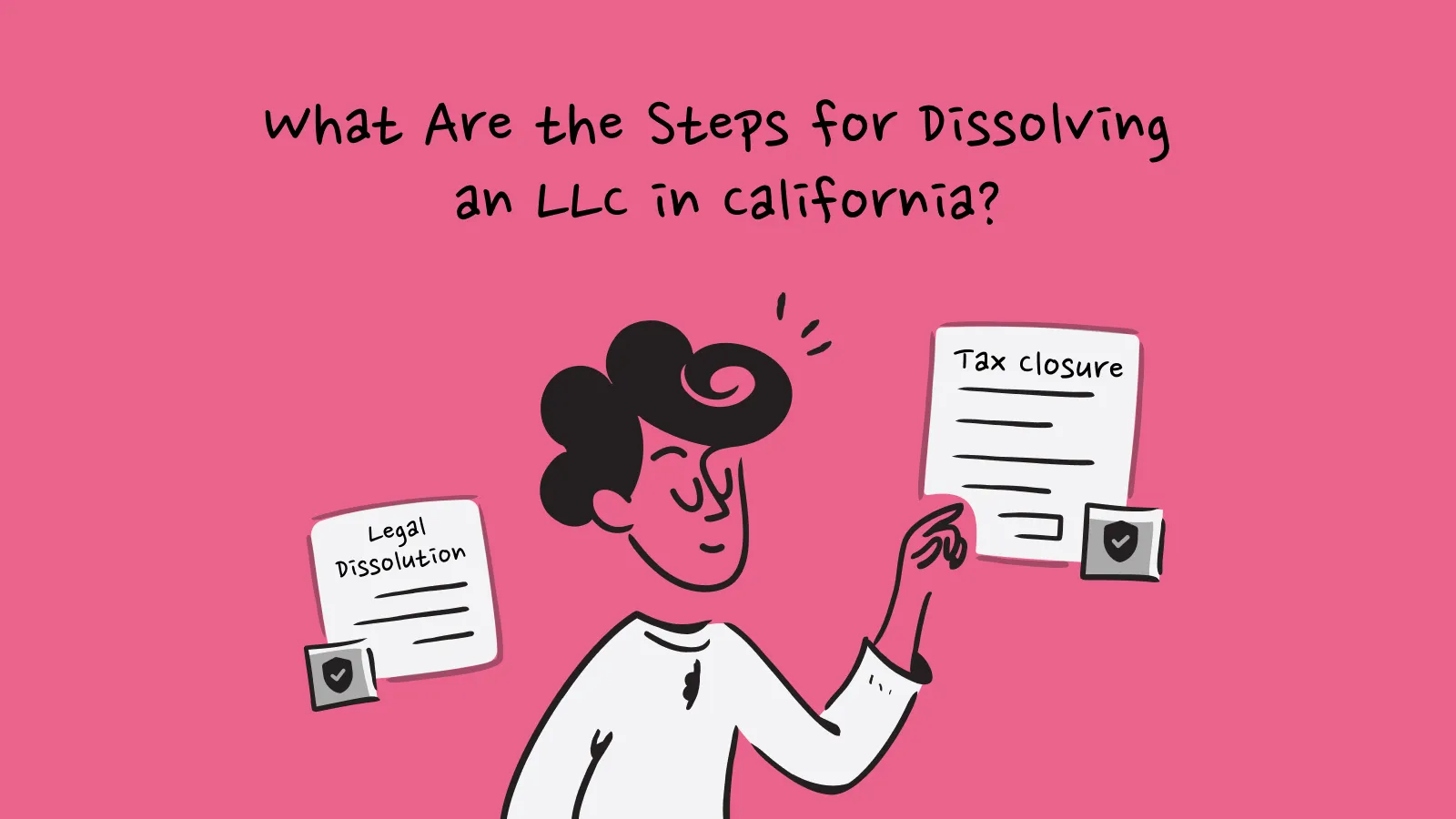


To dissolve an LLC in California, you must complete two linked processes: a legal dissolution with the California Secretary of State and a tax closure with the Franchise Tax Board and the IRS. Skipping either one can keep your LLC active on paper, even if your business has already shut down.
.webp)
Founders often miss that California can continue charging the $800 annual franchise tax until the state and tax agencies confirm closure. One missed form or a delayed filing can trigger penalties and extra fees. This guide explains exactly what to file, when to file it, and how to close your LLC cleanly without surprises.
Legal Steps You Must Take to Dissolve a California LLC
Dissolving your LLC starts with internal approval. California will not accept dissolution filings unless the members have formally agreed to end the business, following your operating agreement or state default rules.
i) Start With Member Approval
Before you file anything with the state, confirm how dissolution decisions must be approved. Most operating agreements define voting thresholds and documentation requirements. If your agreement is silent, California law applies default consent rules based on ownership interests.
Make the decision official and traceable. This protects you if questions arise later from the Secretary of State, tax authorities, or creditors.
Here’s a checklist for proper member approval:
- Review voting and consent rules in the operating agreement
- Confirm whether unanimous or majority approval is required
- Record the decision through written consent or meeting minutes
- Store approval records with your company documents
ii) File the Right State Forms to End the LLC
After member approval, the next step is filing dissolution and cancellation forms with the California Secretary of State. This step formally tells the state that your LLC is winding up and should no longer exist as a legal entity. Until these forms are accepted, California still treats your LLC as active.
The filing path depends on two factors:
- How the dissolution was approved, and
- Whether your LLC ever conducted business.
Choosing the wrong form can also block tax closure later with the Franchise Tax Board.
Below is a breakdown of the forms and how they fit into the dissolution flow.
LLC-3 is is a dissolution notice. You file it when your operating agreement or ownership structure requires a formal step before cancellation. After filing LLC-3, you must still complete the process by filing LLC-4/7.
LLC-4/7 is the form that actually terminates the LLC. Most California LLCs use this form after member approval and winding up activities. Once accepted, the LLC no longer exists under state law.
LLC-4/8 is a shortcut, but only for very specific cases. Your LLC must meet all conditions, including no business activity, no debts, no assets, and full member consent. If any requirement is missed, the filing can be rejected.
Here are important filing details to keep in mind while dissolving an LLC in California:-
- The Secretary of State does not review tax compliance. Approval here does not stop franchise tax charges.
- Forms can be filed by mail or in person. Processing times vary by method.
- Errors or missing signatures often result in rejection without notice.
- Filing state forms does not cancel your EIN or federal tax duties.
How to Handle California Franchise Tax Board Requirements
Filing dissolution forms with the Secretary of State does not end your tax obligations. California treats legal closure and tax closure as separate actions. Until the Franchise Tax Board confirms final filings and payments, your LLC can still accrue taxes and penalties.
This is where many dissolutions go wrong. Businesses stop operating, file cancellation forms, and assume the process is complete. From the FTB’s view, the LLC is still active until final tax returns are filed correctly.
File Final Form 568 and Pay Outstanding Balances
Every California LLC must file a final Form 568 unless it qualifies for very limited exemptions. On the form, you must clearly mark it as the final return. This includes checking the “Final” box and writing “Final” at the top to avoid processing confusion.
Along with the return, you must settle all outstanding amounts. This includes the $800 franchise tax, plus any interest or penalties that apply. If the LLC operated for even part of the year, the tax usually applies for that year.
Timing matters here. If you stop business operations and complete dissolution before year end, you can avoid triggering a new franchise tax for the following year. Delays that cross into a new tax year often result in another $800 charge, even if the LLC earned nothing.
What Happens If You Skip Filing Form 568
Failing to close things properly with the Franchise Tax Board can keep your LLC financially active long after you think it is gone.
Common consequences include:
- Ongoing $800 franchise tax charges despite no operations
- Accruing interest and late filing penalties
- Notices and collection actions from the FTB
- Rejected or delayed cancellation status due to incomplete records
Until the FTB processes your final return and payments, California does not treat the LLC as fully closed.
Coordinate Federal Tax Closure with State Dissolution
Closing your California LLC is not complete until federal tax obligations are wrapped up. The IRS does not automatically receive updates from the state. You must actively file final returns and notify the IRS to prevent future notices or filing expectations.
This step ensures your business does not remain active in IRS systems after dissolution.
i) File the Right Final Federal Return
The final federal return depends on how your LLC is taxed. Even if the LLC had little or no activity, a final return is usually required to formally close the account.
File the form that matches your tax classification:
- Schedule C for single-member LLCs taxed as sole proprietorships
- Form 1065 for multi-member LLCs taxed as partnerships
- Form 1120 or 1120-S if the LLC elected corporate tax status
On the return, mark the “Final return” box. This signals to the IRS that no future filings should be expected for that entity.
If the LLC had employees, contractors, or issued information returns, make sure those filings are also completed before marking the federal return as final.
ii) Close Your EIN With the IRS
After all federal returns are filed and accepted, you should close the LLC’s EIN. The IRS does not cancel EINs automatically.
To close it, send a written request to the IRS stating that the business has closed and include:
- The LLC’s legal name
- EIN
- Business address
- Reason for closure
Once processed, the IRS records the EIN as closed and stops future filing requirements tied to it.
Step-by-Step Checklist for California LLC Dissolution
Dissolving a California LLC works best when you follow a clear sequence. Skipping steps or filing out of order often causes delays, rejected forms, or ongoing tax charges. Use this checklist to track progress from internal approval to final closure.
Follow these steps in order to close your LLC cleanly:
- Review the operating agreement and confirm dissolution rules
- Obtain member approval and document it in writing
- File LLC-3 if a formal dissolution filing is required
- File LLC-4/7 for standard cancellation or LLC-4/8 for eligible inactive LLCs
- Notify creditors, settle outstanding liabilities, and distribute remaining assets
- File final Form 568 with the Franchise Tax Board and pay all balances
- File final federal tax returns and mark them as final
- Submit a written request to close the EIN with the IRS
- Cancel local business licenses, permits, and registrations
- Retain dissolution and tax records for future reference
Each step builds on the previous one. Completing filings out of order often leads to rework or follow-up notices.
How Inkle Helps Simplify LLC Dissolution in California
Closing an LLC involves state filings, tax returns, and coordination across agencies. Doing this manually often means juggling deadlines, forms, and follow-ups. Inkle brings these steps together so nothing falls through the cracks.
i) End-to-End Filing and Tax Support in One Platform
Inkle helps you manage the full dissolution journey in one place. From preparing California cancellation forms to filing final state and federal tax returns, the process stays organized and trackable.
You can file the required Secretary of State forms, complete final Form 568, submit federal returns, and close your EIN without switching tools or guessing next steps. Everything follows a clear sequence, which reduces back-and-forth and avoids missed filings.
ii) Avoid Penalties and Delays With Guided Compliance
Inkle keeps dissolution on track with structured workflows and expert review.
- Alerts help you avoid triggering the $800 franchise tax again
- Federal and state filings stay aligned and consistent
- CPA support covers asset distributions and tax reporting
- A simple dashboard shows what is filed, pending, or complete
If you want to dissolve your California LLC without delays or surprise fees, Inkle can handle the process from start to finish. Book a free demo with Inkle and close your LLC the right way.
Frequently Asked Questions
1. Which forms do I need to dissolve a California LLC?
Most LLCs file LLC-4/7 to cancel the business. LLC-4/8 applies only to qualifying inactive LLCs. LLC-3 is required in limited cases where a formal dissolution step is needed before cancellation.
2. What happens if I stop operations but do not cancel the LLC?
California may continue charging the $800 annual franchise tax. Penalties and interest can also accrue until the LLC is formally canceled with the state and closed with the Franchise Tax Board.
3. When should I file final Form 568?
File it before or alongside the LLC cancellation forms. Mark the return as “Final” and pay all outstanding tax to prevent continued charges.
4. Can I skip filing Form 568 if the LLC never operated?
Only LLCs that qualify for LLC-4/8 and meet all simplified cancellation conditions may avoid filing Form 568. Most LLCs still need a final return.
5. How long does the dissolution process take?
State processing usually takes three to six weeks. Tax clearance can take longer, depending on filing timing and return processing.
6. Does Inkle handle both state and IRS filings for dissolution?
Yes. Inkle supports California dissolution forms, final state and federal tax filings, and EIN closure.