File Form 7004 Business Tax Extension and Avoid Penalties


Manual tax compliance can slip quickly when deadlines approach. For corporations and LLCs, missing a filing deadline is not just an administrative delay. It can trigger penalties, interest, and additional scrutiny from the IRS. As businesses scale or operate across entities, even a small delay can create reporting gaps that take weeks to fix.
This is where Form 7004 becomes important. It gives businesses a structured way to request extra time to file their tax returns while staying compliant. However, many founders misunderstand what an extension actually covers. It does not delay tax payments, and errors during filing can still lead to penalties.
So what happens if your business cannot meet the tax deadline but still wants to stay compliant? This guide answers that question step by step, helping you understand how Form 7004 works, when to use it, and how to avoid costly mistakes.
What Is Form 7004? When Should You Use It?
Form 7004 is an IRS form that allows businesses to request an automatic extension of time to file certain federal tax returns. It applies to corporations, partnerships, LLCs, and other entities that need more time to prepare accurate filings. Instead of rushing through financials, businesses can use this extension to complete reporting properly.
.webp)
An “extension to file” simply means you get extra time to submit your return, not extra time to pay taxes. The IRS expects you to estimate and pay any tax due by the original deadline. If you delay payment, penalties and interest can still apply even if your extension is approved.
Businesses should use Form 7004 when:
- Financials are not yet finalized for complex reporting requirements.
- Additional time is needed to ensure accuracy in Forms 1120, 1120-S, or 1065.
- Avoiding penalties and maintaining compliance as the company grows is a priority.
Who Can File Form 7004 for Business Tax Extension
Form 7004 is available to a wide range of business entities that are required to file federal tax returns in the US. If your business files a return such as Form 1120, 1120-S, or 1065, you can generally request an extension using this form. This makes it especially useful for startups, growing companies, and businesses managing multiple entities or cross-border structures.
Here are the business entities that qualify for Form 7004:-
- C-Corporations (Form 1120)
- S-Corporations (Form 1120-S)
- Partnerships (Form 1065)
- Multi-Member LLCs filing as a corporation or partnership
Deadlines You Should Track for Form 7004 Filing
The exact deadline depends on your entity type and accounting year. Most startups follow a calendar year, but businesses with a fiscal year need to calculate deadlines based on their year-end. Tracking both original and extended deadlines helps ensure you stay compliant across filings.
For calendar-year businesses, deadlines are tied to standard IRS filing dates. Partnerships and S-corporations typically file earlier than C-corporations, which often creates confusion for founders managing multiple entities.
If your business follows a fiscal year, your filing deadline falls on the 15th day of the third month (for partnerships and S-corporations) or the fourth month (for C-corporations) after your year-end. The extension timeline then adds 6 months from that original due date.
Here’s how Form 7004 deadline looks like:-
How Does the Automatic 6-Month Extension Work in Practice
Form 7004 provides an automatic extension once it is correctly filed on time. There is no separate approval process in most cases. As long as the form is complete and submitted before the original deadline, the IRS grants an additional 6 months to file your return. This gives finance teams time to finalize books, review entries, and ensure accuracy.
However, this extension only applies to filing the return, not paying taxes. The IRS still expects you to estimate your total tax liability and pay any amount due by the original deadline. If your estimate is too low or payment is delayed, penalties and interest will apply.
- The extension period starts immediately after the original filing deadline passes.
- Any estimated tax due must be paid by the original deadline to avoid penalties.
- Late payment penalties and interest are calculated on any unpaid balance, even if the extension is approved.
How Is Form 7004 Different from Form 4868
Form 7004 and Form 4868 both offer a 6-month extension, but they serve completely different taxpayers. Form 7004 is designed for businesses such as corporations, partnerships, and LLCs that need more time to file complex returns. Form 4868 is meant for individuals filing personal income tax returns.
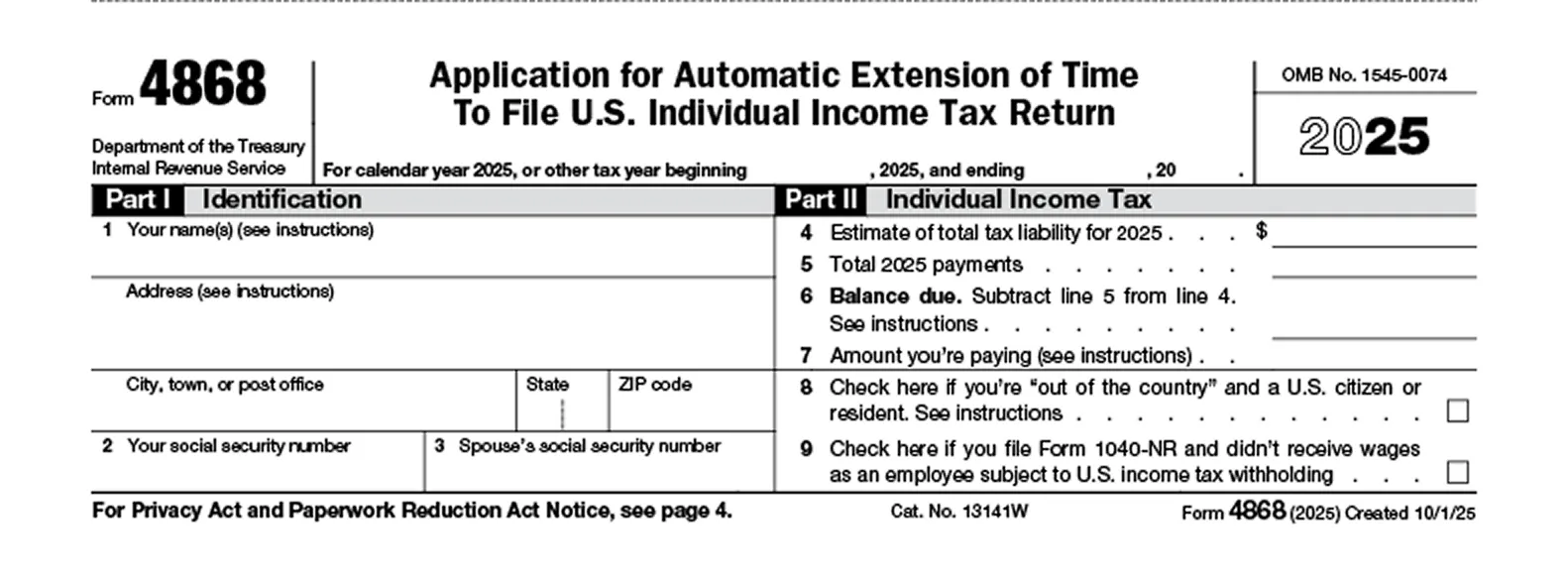
Form 7004 applies to business entities that file returns like Form 1120, 1120-S, or 1065. Form 4868 applies to individuals, including sole proprietors filing personal returns.
Both forms only extend the time to file the return. They do not extend the time to pay taxes. You must estimate and pay any taxes due by the original deadline in both cases.
Use Form 7004 if your business needs more time to finalize financials or handle complex reporting. Use Form 4868 if you need extra time to file your personal tax return but can estimate your taxes due.
Step-by-Step Process to Fill Form 7004
Before you begin, gather your latest financial numbers, confirm the tax return your business is required to file, and decide whether you will submit the form electronically or by mail. Once that is clear, you can move through the process in a clean and organized way.
Step 1: Confirm That Your Business Needs Form 7004
Start by checking whether your business return is one of the returns covered by Form 7004. This form is commonly used by C-corporations, S-corporations, partnerships, and multi-member LLCs that need extra time to file. If your business is filing one of the eligible returns, Form 7004 is the form that requests the extension.
Step 2: Identify the Correct Tax Return Code
Form 7004 requires you to enter the code that matches the business tax return you are extending. (see Part I, Line 1, of Form 7004)

This step is important because the IRS uses that code to understand which return the extension applies to. If you choose the wrong code, your filing may not be processed correctly.
Step 3: Enter Your Business Details Correctly
Fill in your legal business name, address, and Employer Identification Number exactly as they appear in IRS records. Even small mismatches can create filing issues, so this step should be checked carefully before you move ahead.
Step 4: Estimate Your Total Tax Liability
Form 7004 asks for your tentative total tax for the year. This is your best estimate of what the business owes, based on the financial information currently available. The estimate does not have to be perfect, but it should be reasonable and backed by updated numbers.
Step 5: Report Payments Already Made
After estimating your tax liability, enter the payments your business has already made. This may include prior deposits, estimated payments, or credits. The IRS uses this information to calculate whether any balance is still due by the original filing deadline.
Step 6: Pay Any Remaining Tax Due
This is one of the most important parts of the process. Form 7004 gives you more time to file the return, but not more time to pay the tax. If your estimate shows an unpaid balance, that amount should be paid by the original due date to reduce the risk of penalties and interest.
Step 7: Review the Form Before Submission
Before filing, go through each field again and confirm that the business name, EIN, form code, tax estimate, and payment details are accurate. A quick review can prevent avoidable mistakes that lead to processing delays or compliance issues.
Step 8: Submit Form 7004 Through the Right Method
You can file Form 7004 electronically through an IRS-authorized e-file provider or send it by mail. Electronic filing is usually the simpler option because it is faster and reduces manual errors. Once submitted, keep a copy of the form and proof of filing for your records.
Why Does Extension to File Not Mean Extension to Pay
Many businesses assume that filing Form 7004 gives them more time for everything related to taxes. That is not the case. The extension only applies to filing your return, not paying your taxes. The IRS still expects you to settle your estimated tax liability by the original deadline.
If you do not pay on time, the IRS starts applying penalties and interest on the unpaid amount. This means you can still face additional costs even if your extension is valid. The goal of filing Form 7004 should be to gain time for accurate reporting, not to delay payment.
- Late payment penalties apply if you do not pay the estimated tax by the original due date.
- Interest starts accruing immediately on any unpaid balance and continues until the amount is cleared.
- Making a reasonable and timely estimate helps reduce the risk of penalties and keeps your compliance clean.
How Can Inkle Help You Stay Compliant with Business Tax Deadlines
Managing tax deadlines becomes harder as your business grows, especially if you operate across entities or geographies. Filing Form 7004 is just one part of the process. You also need clean books, accurate estimates, and a system that ensures nothing slips through the cracks.
Inkle helps startups and growing businesses stay on top of compliance without scrambling close to deadlines. By combining bookkeeping, tax tracking, and filing support, it ensures you always have the data and visibility needed to file on time and avoid penalties.
- Automate bookkeeping so your financials are always updated and ready for tax estimation.
- Set up deadline tracking and reminders so you never miss key IRS filing dates.
- Manage multi-entity and cross-border structures with a single compliance workflow.
- Access accurate, audit-ready financial data when preparing tax filings or extensions.
Book a demo with Inkle and see how your compliance workflow can run smoothly end to end.
Frequently Asked Questions
How long does a Form 7004 extension last
The extension typically gives businesses an additional 6 months to file their tax return.
Can you file Form 7004 after the deadline
No, you must file Form 7004 on or before the original due date. Late filing can lead to penalties unless you can show reasonable cause.
Do you need to pay taxes when filing Form 7004
Yes, you must estimate and pay your taxes by the original deadline. The extension only applies to filing, not payment.
Is Form 7004 free to file
You can file it for free through IRS-authorized e-file providers. Some platforms may charge a service fee for added features.
What happens if you choose the wrong form code
Selecting the wrong form code can delay processing or invalidate your extension request. Always match the code with your tax return type.
Can startups and foreign-owned US entities use Form 7004
Yes, eligible entities, including startups and foreign-owned US businesses, can file Form 7004 if they meet IRS requirements.